Scientists have created a microscopic QR code so tiny it can only be seen with an electron microscope—smaller than most bacteria and now officially a world record. But this isn’t just about size; it’s about durability. By engraving data into ultra-stable ceramic materials, the team has opened the door to storing information that could last for centuries or even millennia without needing power or maintenance.
Of course this is just a theoretical exercise. Technically, there’s nothing in a QR code’s algorithm or the mathematics that prevents it from scaling infinitely. The error correction algorithm even allows up to 30% of the code to be damaged and still retrieve the data.
Practically though… Well, given the QR code is smaller than bacteria, paper looks more like a tangled forrest of plant fibers at that scale. Paper just doesn’t support that kind of resolution.
However, I’m inclined to believe humanity can print that QR code on silicon wafers like we do with chips.
Actually QR codes can have something like 99% error correction as long as you’re storing only 1 byte and use the biggest QR code format. It’s common to scale up by 1 format if you want a logo in the middle.


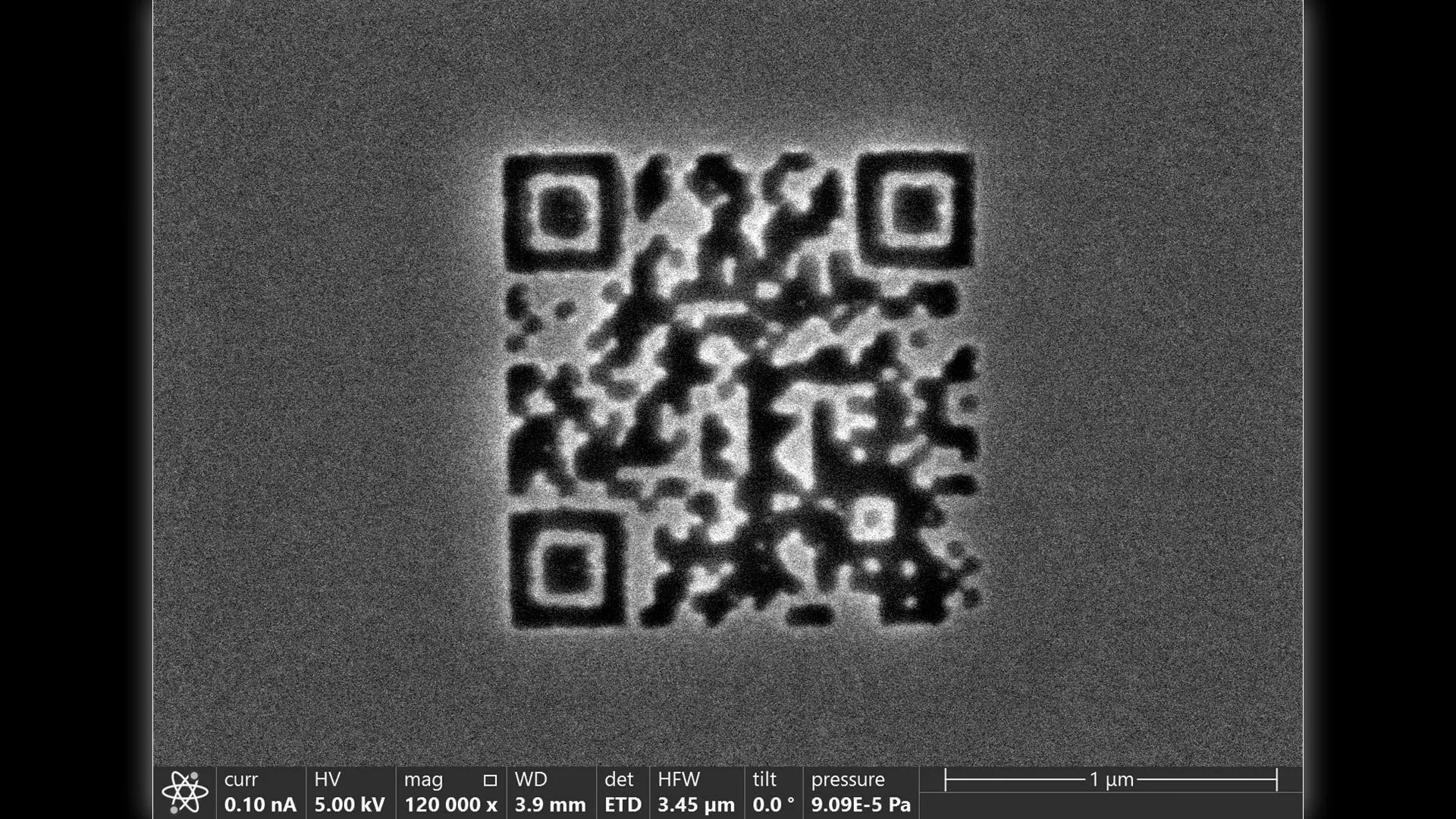
Of course this is just a theoretical exercise. Technically, there’s nothing in a QR code’s algorithm or the mathematics that prevents it from scaling infinitely. The error correction algorithm even allows up to 30% of the code to be damaged and still retrieve the data.
Practically though… Well, given the QR code is smaller than bacteria, paper looks more like a tangled forrest of plant fibers at that scale. Paper just doesn’t support that kind of resolution.
However, I’m inclined to believe humanity can print that QR code on silicon wafers like we do with chips.
Actually QR codes can have something like 99% error correction as long as you’re storing only 1 byte and use the biggest QR code format. It’s common to scale up by 1 format if you want a logo in the middle.
Most encoders are just programmed for 30%.