
0·
18 hours agoNicknames are often erratic — cue to Juca (Joaquim), Chico (Francisco; no idea why the /ʃ/), Mafê (Maria Fernanda). I don’t know why, but I feel like they work through a different logic than simple shortenings.

I have two chimps within, Laziness and Hyperactivity. They smoke cigs, drink yerba, fling shit at each other, and devour the face of anyone who gets close to either.
They also devour my dreams.
Nicknames are often erratic — cue to Juca (Joaquim), Chico (Francisco; no idea why the /ʃ/), Mafê (Maria Fernanda). I don’t know why, but I feel like they work through a different logic than simple shortenings.
Se incomoda se eu responder em português? Então, pra resumir a missa: tenho quase certeza que o xingamento (viado) vem do nome do bicho (veado). Motivos:
I think it also applies to expletives. Check for example ⟨vagabunda⟩* /va.ga.'bũ.da/; if there was some pressure to keep the stressed syllable it would be clipped into *bunda or *gabunda, but it’s usually clipped into ⟨vagaba⟩ instead. Technically the /b/ from the stressed syllable is still there, but the core /ũ/ ⟨un⟩ is gone.
*gotta explain this one to the folks here. “Vagabunda” means whore, promiscuous woman, etc. It’s highly offensive, way more than the nearest English equivalent (slut), it’s the sort of word to not use even in a joke. (The masculine “vagabundo” is depreciative but socially acceptable — it means lazy arse, do-nothing.)
100% isso.
Em especial, essa “flexibilidade” aparece bastante pras vogais átonas, variam muito de acordo com o dialeto e o ritmo da fala. E ao contrário da variação nas consoantes, as pessoas não prestam muita atenção nelas.
I’m fairly sure what happened with “viado” in PT was just like “nigga” in English. In both you get a non-standard spelling of another word (“veado” and “nigger”), representing a popular pronunciation of the word (note African American English is non-rhotic, so ⟨er⟩ and ⟨a⟩ would sound both /ə/). But they still sound the same in those popular variations.
Pior que acho que o outro ali nem fala português. Ao menos, não proficientemente. Reparou como ele confundiu “esse” com “isso”?
For that pair of words (ES año vs. PT ano) this works, but note the correspondence gets really messy, it depends on the etymology of the word. A quick run-down would be:
| Origin | Spanish | Portuguese | Example |
|---|---|---|---|
| Late Latin */nj/ | /ɲ/ ⟨ñ⟩ | /ɲ/ ⟨nh⟩ | Latin balneum → baneum → *banjʊ̃ → ES baño, PT banho “bath” |
| Latin /gn/ [ŋn] | /ɲ/ ⟨ñ⟩ | /ɲ/ ⟨nh⟩ | can’t recall an example both kept, but Latin agnum → PT anho /ɲ/ “lamb” (archaic) |
| Latin /n:/ | /ɲ/ ⟨ñ⟩ | /n/ ⟨n⟩ | Latin annum → ES año, PT ano “year” |
Then for Latin intervocalic /n/ Spanish simply keeps it. Portuguese initially converts it into vowel nasalisation, but then changes it further on, it’s a bit messy:
For ES “ano” anus and PT “ânus” anus this doesn’t work, though. Portuguese didn’t inherit the word, but reborrowed it. And perhaps to avoid making it sound like “ano” (year), kept the Latin nominative ending. (If the word was inherited it would end as *ão or something like this.)
This suggests widespread homophobia if enough of them could combine their brainpower to form these few thoughts
Yup, that’s accurate. Welcome to Latin America and its macho culture. People don’t even get why those jokes are bad. Then when the LGBTQ+ community correctly points out that “a piada mata mais do que a bala” (the joke kills more often than the bullet), the default popular reaction is to claim “waaah they’re overreacting” (spoilers: they aren’t).
Viado comes from desviado, which means someone who was driven off the proper path. It’s just a matter of homophony (and homophobia).
I’ve seen people backtracking the etymology to desviado and transviado. I don’t buy it because clipping (truncamento) in Portuguese usually preserves the start of the word, even at the expense of the stressed syllable; e.g.
So following the same pattern for “desviado” the result would be *des or *desvi, not “viado”.
It gets weirder with expletives. Like “puta merda” whore shit and “merda do caralho” shit from the dick. They don’t make sense at all, people simply chain whatever profanity they find to “express” their frustration. (And you can even combine them, as “puta merda do caralho” whore shit from the dick. Semantically it’s nuts.)
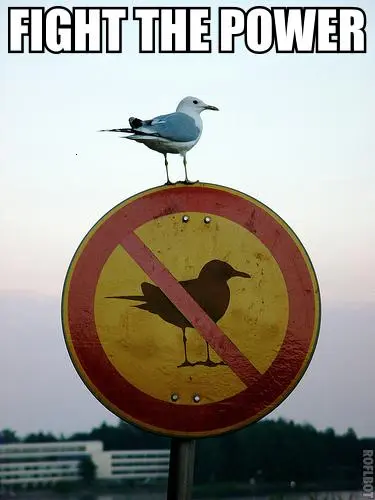
So you walk like a duck, quack like a duck, but someone plucked your feathers off??? :P
Warning: the poster above is a bird pretending to be a human being, to infiltrate into mammal society. Discretion is advised.
I shared it ITT, but basically:
There’s that stereotype of gay people being flamboyant, and often hopping in excitement. That created a bunch of associations between hopping animals and gay people; e.g. “gazela” (gazelle), “bicha saltitante” (jumping/hopping beast*), but specially “veado” (deer). Often spelled as “viado”.
And there’s a gambling lottery called “jogo do bicho” (critters’ game, or animals’ game). Illegal but extremely popular, to the point some knowledge of the game is part of the popular culture. It associates 25 animals with numbers, and #24 is “veado” / deer.
So: if 24 is veado, and veado is gay, then 24 is gay. Plop it into a macho culture, much like in the rest of Latin America, and you’ll see people avoiding the number. Even for their birthdays.
Nowadays it’s mostly a joke; but frankly I don’t like it, it still treats gay people negatively, as if “gay” was “to be avoided”. Roughly in the same level as “we did $thing but no homo!” in English, you know?
For people who might be tempted to trust the witch hunting liar above, check the transcriptions in Wiktionary for veado and viado. Both lists are incomplete but they already show, that what I’m saying is accurate, and that the user above is at the very least lying, if not worse (vomiting assumptions and re-eating their own vomit).
Also relevant to note I’m reporting words associated with prejudice. I’m not condoning their usage. The way I’m referring to gay people and their community ITT is consistently polite, even if I’m talking about a slur used to target those folks. Gay rights — much like trans rights — are human rights; rights depend on power, power depends on knowledge. That applies to slurs; one can only fight against prejudice if they know how it’s conveyed, and how words associated with prejudice pop up.
It’s only the same if you ignore Portuguese pronunciation
Viado e veado não soam igual, [viado and veado don’t sound the same]
Nem os tugas falam assim. [not even the Portuguese speak like this]
Portuguese pronunciation varies a lot depending on the region. There isn’t a “single” one, like you’re implying; that’s fiction created by nationalists who believe languages should be homogeneous.
For “veado” you’ll see the [e] being raised to [i] or [j] in three situations:
You’re lying.
this is still some rightwing snowflake shit
No, it is not. Learn to read then stop being a liar / an assumer.
But you know, what’s rightwing shit? This:
Veado and viado will only sound the same if you speak some ignorant, backwater version of Brazilian Portuguese
You’re oozing linguistic prejudice, rooted in nationalism (the myth of homogeneous language), further mixed with classism (“backwater”). What you’re saying is the same as “my Reichsprache has a single pronunciation, everyone else is an ignorant degenerating it!”, it doesn’t get more disgusting than that.
so I’m not sure what you’re talking about.
eu não sei de que você tá falando.
If you don’t get what others say, you don’t get to label it either, unless you’re a disingenuous / assumptive piece of shit and deserve to be treated as such.
But the concept of honesty is a wee bit too complex for you, innit? Bloody hell.
Some prescriptivists would argue “viado” isn’t an actual word, and that even the slur should be spelled “veado”. But just like “buceta” the misspelling has become way more popular than the original word.
Number 24 corresponds to deer, which is “veado” in portuguese - which is very similar to"viado", which is a slur for gay people persons.
The slur isn’t just similar to the name of the critter — it is the name of the critter. You also see people using “gazela” (gazelle), “Bambi” (that Disney critter), “biba saltitante” (jumping… “biba”, dunno what was supposed to be) as slurs for gay people, always under the “flamboyantly jumping” stereotype.
The reason it gets spelled with an “i” is that slurs and swearing often get misspelled in Portuguese. It’s the same deal with boceta→buceta (pussy), caralho→caraio→carai (dick), foder→fuder→fudê (to fuck).
Years = anos; anus = ânus. They’re spelled different. Depending on dialect they may or may not sound the same.
It’s more like a lottery than a board game. But a really popular one, regardless of the prohibition against gambling, and the numbers / critters association never changes.
There are other popular expressions from the same game. Like “deu zebra” (the result was zebra) for something extremely unlikely to happen. (Note how there’s no zebra in the sheet.)
No, it’s because of an old betting game called “jogo do bicho” (critters’ game):

Check #24. “Veado” (deer), often misspelled “viado”, is used as a slur for gay people.

I’d argue not even a hypothetical AGI (artificial general intelligence), with capabilities similar to a reasonable and able-minded human being, would be able to testify in a court.
An AGI would be able to lie, like a human being; but unlike a human being, it gets no consequence for its actions; for example it can’t be jailed for perjury.
Also, for people downvoting the OP: less knee-jerk reaction, more “no stupid questions”. Pleeeeeeeeeeeease.


É geralmente assim com palavrão, a etimologia é sempre uma bagunça. Eles são usados constantemente então o significado evolui muito rápido, só que quase não tem registro, as pessoas evitam de escrevê-los.
Só pra te dar um exemplo. Um dos palavrões com etimologia mais bem estudada é o “merda” do latim. Sabemos ser herdado do proto-indo-europeu, e que os falantes de latim usavam-no direto, já que tudo quanto é língua neolatina herdou a merda. Mesmo assim a gente quase não sabe em que situações os falantes de latim usavam a palavra, porque quase nunca era escrita; só em uns epigramas do Marcial e umas pichações em Pompeia. (inb4 sim, é o mesmo “merda” do português.)
Com esses insultos é a mesma coisa. As pessoas evitam de registrar. E nisso a gente perde a história deles.