
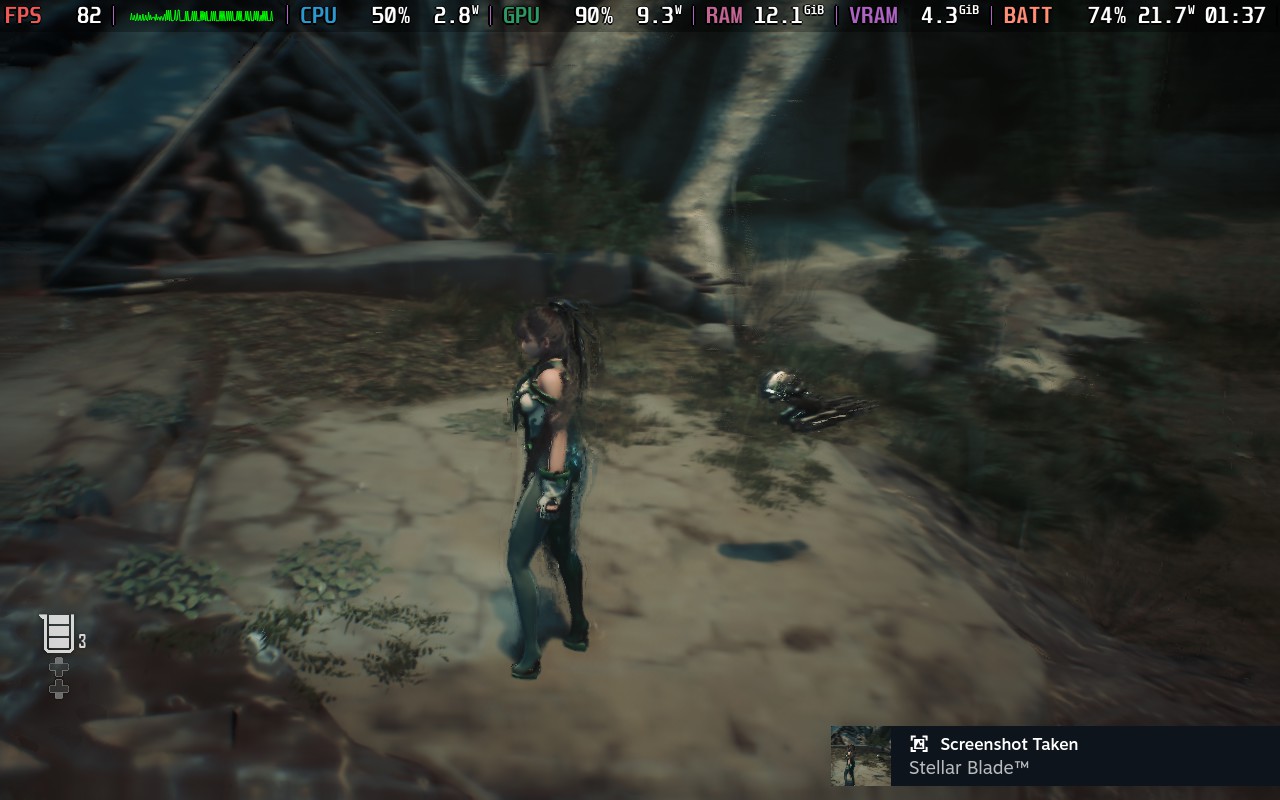
This is for multiplying your fps by 3x or 4x, but the input lag, ghosting, stuttering, and other issues make everything worse. Overall I’d recommend sticking to lossless scaling at 2x or not using framegen at all.
But they make the numbers bigger! Biggest number is best number!
Pfft, you get a chart with no legend, we don’t need no stinking numbers
do unsupported thing on unsupported hardware
it’s bad
*socked Pikachu*
Last time I tried one of these filters, the game looked terrible (it was Death Stranding). It applied a weird squiggly, distorted look that wasn’t even remotely better looking. For games where you need precision and timing, I can see this making multiplayer games hell.
This doesn’t surprise me. Raw math, frame gen makes no sense to me unless you’re already hitting 120 FPS natively, and therefore you need at minimum a 240Hz display to make use of it.
Basic math, to generate frames, you must have the next frame ready to generate an in-between. Which means your frame display is delayed by a frame, meaning your input lag is equivalent to natively running at half the rate you’re natively running at. And this is assuming flawless, instant frame generation. For “motion smoothness”, a vague, not all that important element of game feel, IMO.
So, crunch some numbers. Natively running at 60? Neat, you can have the “motion smoothness” of 120 for the input lag of 30. Not worth it IMO, 30 feels pretty rough when you’re used to 60.
Native 120? Alright, the difference in input lag to 60 is way less. 8ms of added lag is tolerable, and with 4x frame gen you can drive a 480Hz monitor. Pretty good, and the time gap is small enough you’ll have minimal visible errors in the generated frames. The question of course being… do you own a 480Hz monitor? Not to mention 120 has solid motion smoothness already, so it’s still kind of a questionable trade. I’d still personally prefer native 120, but it’s at least reasonable.
A debatable sweet spot might be 80-100, 40-50FPS is more than halfway to 60 from 30 (in milliseconds), and you can multiply into more reasonable monitors than 480Hz. 360Hz to fully leverage 4x frame gen is something you’re more likely to actually own.
End of the day though, my core takeaway is that frame gen is incredibly niche. You either need to be obsessive about motion smoothness without caring about input lag, have a hella fast monitor and great performance, or uh… most likely, not understand any of this and want framerate go bigger.
Frame Gen is by its very design a really stupid technology
Upscaling tech (DLSS/FSR/etc) is nice as a way to help older/weaker hardware play newer games, and I’ve really appreciated it on the deck. I really don’t like it when games use it as a crutch to avoid having to optimize their game to an acceptable level.
Frame gen is in a worse spot because it usually only works well on hardware that can already hit 60fps. I’ve never found a built in framegen option that was actually usable on the deck without horrendous input lag and/or graphical issues.
Lossless Scaling’s Frame Gen is a sometimes exception, I’ve found a few Deck games that it works really well with. There are still occasional graphical issues/ghosting with it, but it can help out quite a bit. It’s weird to me that 3rd party software from a small dev would work better than integrated FG from the game devs/GPU makers, but it is what it is.