Let’s remember COVID correctly:
- The federal government, “lead” by ScoMo was intent on doing nothing and to “let it rip”
- The states and premiers refused to do this. Yeah, I’m no Gladys fan, but she, and Dan Andrews and the other Premiers/Chief Ministers shut it all down.
- A “national cabinet” of the PM and state/territory leaders was formed so the federal government didn’t look useless and could pretend to be “leading” the covid response. The premiers/Chief Ministers were in charge of each of their states independently. It’s called a ‘federation’ for a reason.
Now, you can compare what’s happening now to what happened with covid
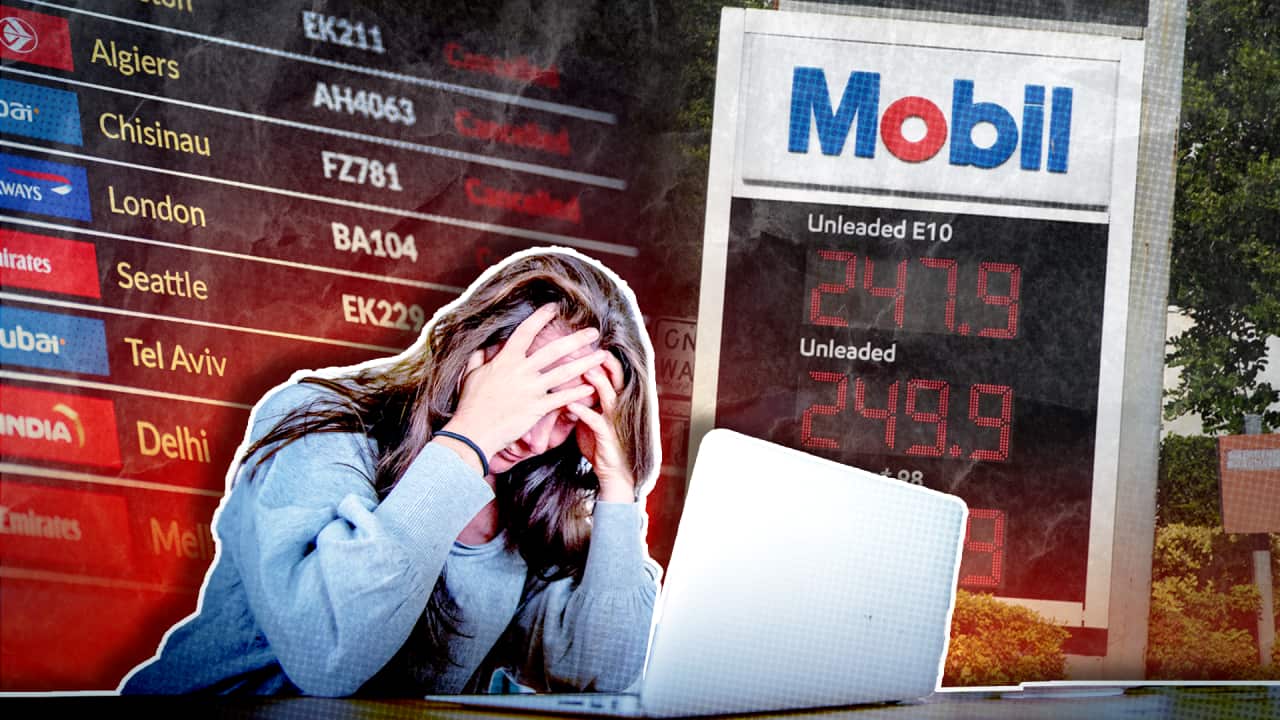
For me the similarity is that this is the most disruptive event to travel and the global economy since the COVID-19 pandemic. I have a friend who’s had to cancel their trip to Europe because their stopover was in the Middle East. I’m also reading about people being encouraged to work from home.
experts have told SBS News that the current economic crisis differs from the pandemic in numerous ways.
saved you a click.
This is a crisis, that was a crisis. That’s as far as the similarity goes really.
Both involve WFH and travel restriction
Any crisis will.
Running out of water?
Ay?
Suburbs north of Sydney had/has no water after worst mains break in history
How is that relevant to covid or the war in the middle east ?
Perhaps we need an article on sbs news to find out for sure, but my guess is that the experts would tell us that they are both examples of crises.
Spectacular proofing there
The biggest similarity for me is that the govt will wait and wait, too scared to do anything that might “harm the economy”. Until it’s too late.
What do you want the govt to do without waiting ?
Short term:
Free public transport.
Free bikes for everyone.
Begin emergency repairs on any old busses that can be pressed into service.
Implement a priority system for who gets fuel:
Tier 1: healthcare, emergency services
Tier 2: food production & distribution
Tier 3: essential infrastructure (power, water, telecoms)
Everything else: on yer bike, son (or heavily rationed)
Ration fertilizer. A lot of it is wasted, currently.
Daily govt briefings - what’s happening, what is being prioritised, what people should do. Maintain clear communication and transparency.
Medium term (but start NOW):
Electrify all busses.
Trams. Melbourne is going to need a lot more of those.
Repair neglected railways.
Move freight by rail and ship as much as possible.
Build cycling infrastructure. Secure places to park many many bikes next to train stations - big sheds.
Remove regulatory barriers for local food production, farmers markets. Encourage urban gardening, local trade networks.
Plant corn fucking everywhere - ethanol.
Strategic reserves of critical medicines, etc.
Diversify food production - for local needs, not for export market needs.
And when anyone says “harms the economy” they of course mean “harms profits”.
You can rephrase it how you like but ultimately it harms everyone.
We haven’t had a recession in decades, but it gets pretty brutal.
Yes some rich people’s yacht money gets deferred, but also young single parents lose their jobs and can’t find somewhere to live.
The poorest among us always bear the brunt of an economic downturn.
At the moment no one can afford a house because of 50%+ inflation since the last crisis. The poorest are the ones who have felt this the most. We NEED a recession, realistically one where prices of everything halve to get back to where they should be.
Would it be terrible for a lot of people? Absolutely - but the alternative is absolutely destroying the economy and affordability already.
Recessions don’t tend to work that way. Like I said the poorest always shoulder the burden.
Its not like kinda turning it off and on again to have a do-over with more reasonable prices.
The poorest always shoulder the burden - of everything - because they’re the ones where even the smallest change affects them the most. They’re the ones most affected by unchecked inflation like we’ve had the last 6 years.
A recession does lead to a “reset” in prices via deflation. Prices go down when spending and earning goes down. That’s literally what happens. Buying power per dollar increases because money is harder to come by, so prices drop to accommodate the drop in spending and earning.
Sure but a “reset” implies everyone starts over.
In a recession people lose all their money. Thats literally why things might get cheaper, because no one can afford them.
As we have both said - the poorest are hardest hit, being the most insecure with employment. Consuming their savings degrading professional networks and connections, even falling into poverty.
In short, if you cant afford to buy a house now, it will be much more difficult to during or following a recession.
Buying power per dollar may increase, but only wealthy people have any dollars. Thats why this type of financial downturn is when wealthy people consolidate their positions and buy more houses et cetera.
As an aside, if property in Australia reduced in value by half, we would probably be a failed state. I dont think our various institutions both public and private could navigate those kinds of catastrophic losses.
That’s my point. The effects on the poorest among us are never a factor whenever politicians or business leaders or the media talks about ‘the economy’.
Bullshit. That’s literally why everyone wants to hear politicians talking about “the economy” because anyone with more than single digit IQ knows that they’re talking about everyone.
Any conversation about the economy includes unemployment rates - this is literally speaking directly about the poorest among us.
Any financial commentary in the last month has talked about interest rates, which is a key “household finance” issue. Perhaps not important to those in abject poverty, but certainly important to anyone who works in a service industry.
Inflation is probably the main thing. Voters and businesses alike hate inflation.
Economy = Rich people’s yacht money.
Sometimes they mean “make the share market go down”, while the share market is just a graph of rich people’s feelings about the future.
That too. Point is it’s never about the real economy, which is regular people trying to get by.